Turn your mortgage into a wealth-building tool. Smith Manoeuvre strategies, tax-smart planning, and honest math from two Canadian mortgage strategists.
The Fed Hold Everyone Expects Will Sink the Dollar Anyway
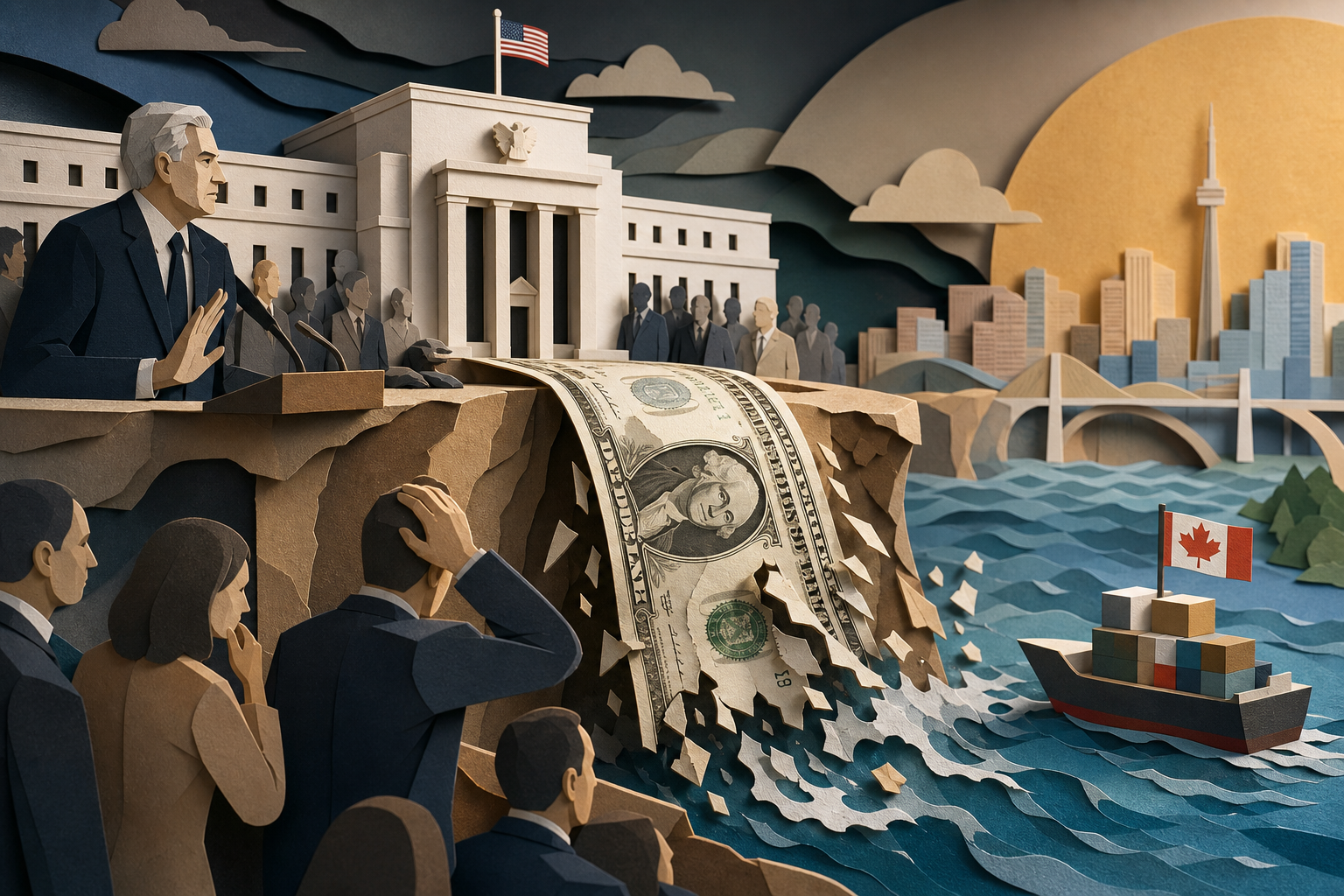
The dollar is trading at 104-106 on the DXY this week, which means the market has already decided what happens Wednesday. Rates stay at 5.25%, 5.50%, the Fed signals one last hike is still on the table, and the greenback holds. That's the consensus. TD Securities says the consensus is wrong, and the mispricing is large enough that a hold will trigger the very selloff everyone thought they were avoiding.
The logic goes like this. Currency markets don't wait for decisions, they front-run them. By the time the FOMC releases its statement, every "hawkish hold" scenario the market expected has been bought. If the actual statement is even one shade less aggressive than priced in, there's nowhere for the dollar to go but down. The problem isn't what the Fed does. The problem is that traders have spent two months betting the Fed will sound tougher than the data now supports.
Why the Hold Was Already Traded
The Fed hasn't cut rates since the hiking cycle ended, and the ECB and Bank of Canada both started easing in early 2026. That yield gap kept dollar inflows strong through spring. But the last CPI print came in at 2.9% year-over-year, the unemployment rate ticked up to 4.1% in July, and the labor market is cooling faster than anyone predicted in Q1. The "higher for longer" trade made sense when inflation was sticky and job growth was resilient. It makes less sense now.
TD's argument is that the market hasn't updated its Fed view to match the data. Headline inflation is gliding toward the 2% target, and the Fed's dual mandate, price stability and maximum employment, doesn't require another hike when unemployment is already rising. But the dollar trade assumes the Fed will keep sounding tough to anchor inflation expectations. If Wednesday's statement acknowledges the cooling labor market or softens the forward guidance even slightly, the long-dollar positioning unwinds fast.
The crowded trade problem is real. When everyone owns the same asset for the same reason, the exit is narrow. The dollar isn't expensive because the U.S. economy is outperforming. It's expensive because traders bet the Fed would stay the most hawkish central bank in the developed world. Remove that bet and the floor drops.
What Happens If TD Is Right
A weaker dollar changes the math on everything priced in dollars. Gold rallies. Oil gets cheaper for non-U.S. buyers, which can shift demand. Emerging market currencies that have been under pressure for two years get relief. For Canadians, a stronger loonie relative to the greenback affects cross-border purchasing power and import costs, which feeds back into domestic inflation in ways the Bank of Canada has to account for.
The counterpoint is that if the hold happens because the economy is weaker than expected, safe-haven demand could keep the dollar bid despite lower rate expectations. Flight-to-safety flows don't follow interest rate logic, they follow fear. But TD is betting the Fed won't sound alarmed. They're betting the statement will be neutral-to-dovish, not crisis-mode.
The other risk is data dependency. The Fed has said repeatedly that future moves depend on incoming data. If the August jobs report surprises to the upside or inflation re-accelerates, TD's thesis collapses within two weeks.
The Asymmetry Everyone Is Ignoring
There's more downside than upside for the dollar from here. A hawkish hold is already priced. Any hint of a future cut wasn't. That's the mispricing TD is naming. The market built a position assuming the Fed would keep talking tough. The data no longer supports that assumption, but the trade is still on.
Wednesday's statement won't move rates. But if it moves language, the dollar comes off.



The dollar is trading at 104-106 on the DXY this week, which means the market has already decided what happens Wednesday. Rates stay at 5.25%, 5.50%, the Fed signals one last hike is still on the table, and the greenback holds. That's the consensus. TD Securities says the consensus is wrong, and the mispricing is large enough that a hold will trigger the very selloff everyone thought they were avoiding.
The logic goes like this. Currency markets don't wait for decisions, they front-run them. By the time the FOMC releases its statement, every "hawkish hold" scenario the market expected has been bought. If the actual statement is even one shade less aggressive than priced in, there's nowhere for the dollar to go but down. The problem isn't what the Fed does. The problem is that traders have spent two months betting the Fed will sound tougher than the data now supports.
Why the Hold Was Already Traded
The Fed hasn't cut rates since the hiking cycle ended, and the ECB and Bank of Canada both started easing in early 2026. That yield gap kept dollar inflows strong through spring. But the last CPI print came in at 2.9% year-over-year, the unemployment rate ticked up to 4.1% in July, and the labor market is cooling faster than anyone predicted in Q1. The "higher for longer" trade made sense when inflation was sticky and job growth was resilient. It makes less sense now.
TD's argument is that the market hasn't updated its Fed view to match the data. Headline inflation is gliding toward the 2% target, and the Fed's dual mandate, price stability and maximum employment, doesn't require another hike when unemployment is already rising. But the dollar trade assumes the Fed will keep sounding tough to anchor inflation expectations. If Wednesday's statement acknowledges the cooling labor market or softens the forward guidance even slightly, the long-dollar positioning unwinds fast.
The crowded trade problem is real. When everyone owns the same asset for the same reason, the exit is narrow. The dollar isn't expensive because the U.S. economy is outperforming. It's expensive because traders bet the Fed would stay the most hawkish central bank in the developed world. Remove that bet and the floor drops.
What Happens If TD Is Right
A weaker dollar changes the math on everything priced in dollars. Gold rallies. Oil gets cheaper for non-U.S. buyers, which can shift demand. Emerging market currencies that have been under pressure for two years get relief. For Canadians, a stronger loonie relative to the greenback affects cross-border purchasing power and import costs, which feeds back into domestic inflation in ways the Bank of Canada has to account for.
The counterpoint is that if the hold happens because the economy is weaker than expected, safe-haven demand could keep the dollar bid despite lower rate expectations. Flight-to-safety flows don't follow interest rate logic, they follow fear. But TD is betting the Fed won't sound alarmed. They're betting the statement will be neutral-to-dovish, not crisis-mode.
The other risk is data dependency. The Fed has said repeatedly that future moves depend on incoming data. If the August jobs report surprises to the upside or inflation re-accelerates, TD's thesis collapses within two weeks.
The Asymmetry Everyone Is Ignoring
There's more downside than upside for the dollar from here. A hawkish hold is already priced. Any hint of a future cut wasn't. That's the mispricing TD is naming. The market built a position assuming the Fed would keep talking tough. The data no longer supports that assumption, but the trade is still on.
Wednesday's statement won't move rates. But if it moves language, the dollar comes off.
Read Next
Realtors Are Walking Away, And the Prenup Surge Tells You Why
Realtors Are Leaving the Industry, and the Numbers Tell You Why
Kelowna Now Ranks First in Canada for Wildfire Risk: What Condo Buyers Need to Verify Before Closing
Kelowna Ranks First for Wildfire Risk in Canada: What Condo Buyers Need to Understand Before Closing