Turn your mortgage into a wealth-building tool. Smith Manoeuvre strategies, tax-smart planning, and honest math from two Canadian mortgage strategists.
A Finished Toronto Condo Just Entered Receivership, and That Changes the Risk Calculus
The Manderley sits two blocks from the Toronto Hunt Club at the corner of Kingston Road and Manderley Drive, eleven storeys of finished units, lobby done, elevators running. The court order appointing a receiver went through in early 2026. The building is substantially complete. That matters.
When receivership hits a condo project in Toronto, the usual pattern involves a hole in the ground, a half-built podium, or structural work stalled at the sixth floor. Those failures happen early, when the gap between budgeted costs and actual costs becomes clear or when a lender refuses to fund the next construction draw. The Manderley is different. Nova Ridge Development Partners Inc., the developer behind the project, made it to the finish line. The 121 units are there. The question is why that wasn't enough.
The Final Mile Problem
A condo project doesn't end when the last drywall goes up. It ends when the final occupancy permits clear, when individual unit sales close, and when the mortgage on each unit transfers from the developer's construction financing to the buyer's residential mortgage. That gap, the space between "substantially complete" and "financially closed," is where projects are failing now in a way they weren't three years ago.
Between 2021 and 2024, residential construction costs in Ontario rose at double-digit annual rates, according to Statistics Canada's Building Construction Price Index. For developers who signed fixed-price contracts with general contractors in 2020 or early 2021, that inflation meant bleeding cash in the final phase. The interest carry on construction loans during those months, at rates that peaked near 7% for senior debt and higher for mezzanine tranches, turned what should have been a controlled wind-down into a cash crisis.
At the same time, mortgage qualification rules tightened. Buyers who qualified for financing in 2022 when they signed their agreements of purchase and sale were failing stress tests by late 2024 and early 2025. Every failed closing means the developer must carry that unit longer, pay interest longer, and either find a new buyer or negotiate a discount with the original one. Do that across even 15% of your unit count and the liquidity model collapses.
What Birch Cliff Tells You About Mid-Rise Risk
The Manderley isn't in a fringe market. Kingston Road through Birch Cliff has been gentrifying steadily, shifting from older motels and auto shops to mid-rise residential. The location, minutes from the Scarborough Bluffs, near transit, with lake access, should be a strength. That's the part that makes this receivership structurally informative rather than anecdotal.
Mid-rise projects operate on thinner margins than towers. An 11-storey building doesn't achieve the per-unit cost efficiency of a 40-storey one. The developer often relies on private or secondary lenders rather than the institutional financing a large tower attracts. When those lenders' covenants trip because closings delay, the options narrow fast. By the time Nova Ridge lost control of the asset, the capital stack had likely compressed to the point where equity was gone and junior debt was impaired.
The Buyer's Position
For someone who put down a deposit in 2021 or 2022 and has been waiting to move in, receivership at this stage is worse than an outright project cancellation. The building exists. The unit is real. But the title won't transfer until the receiver organizes the creditor claims and either completes the sales under existing contracts or cancels them and sells the inventory in bulk. That process can take months. Tarion, Ontario's new home warranty program, protects deposits up to a cap. It does not compensate for three years of rising rent paid while waiting for a closing that kept getting postponed.
The receiver's incentive is to maximize recovery for secured creditors, not to honor the original sales timeline. If bulk sales to a REIT or institutional landlord return more than individual closings, that's the path the receiver will take. The Manderley could end up as rental inventory, not ownership, despite being sold as condos.
Receivership used to be a sign that something went wrong early. Now it's a sign that the last 10% of the project, the part that should have been the easiest, became unaffordable to finish under the terms the developer started with. The building's there. The developer isn't.


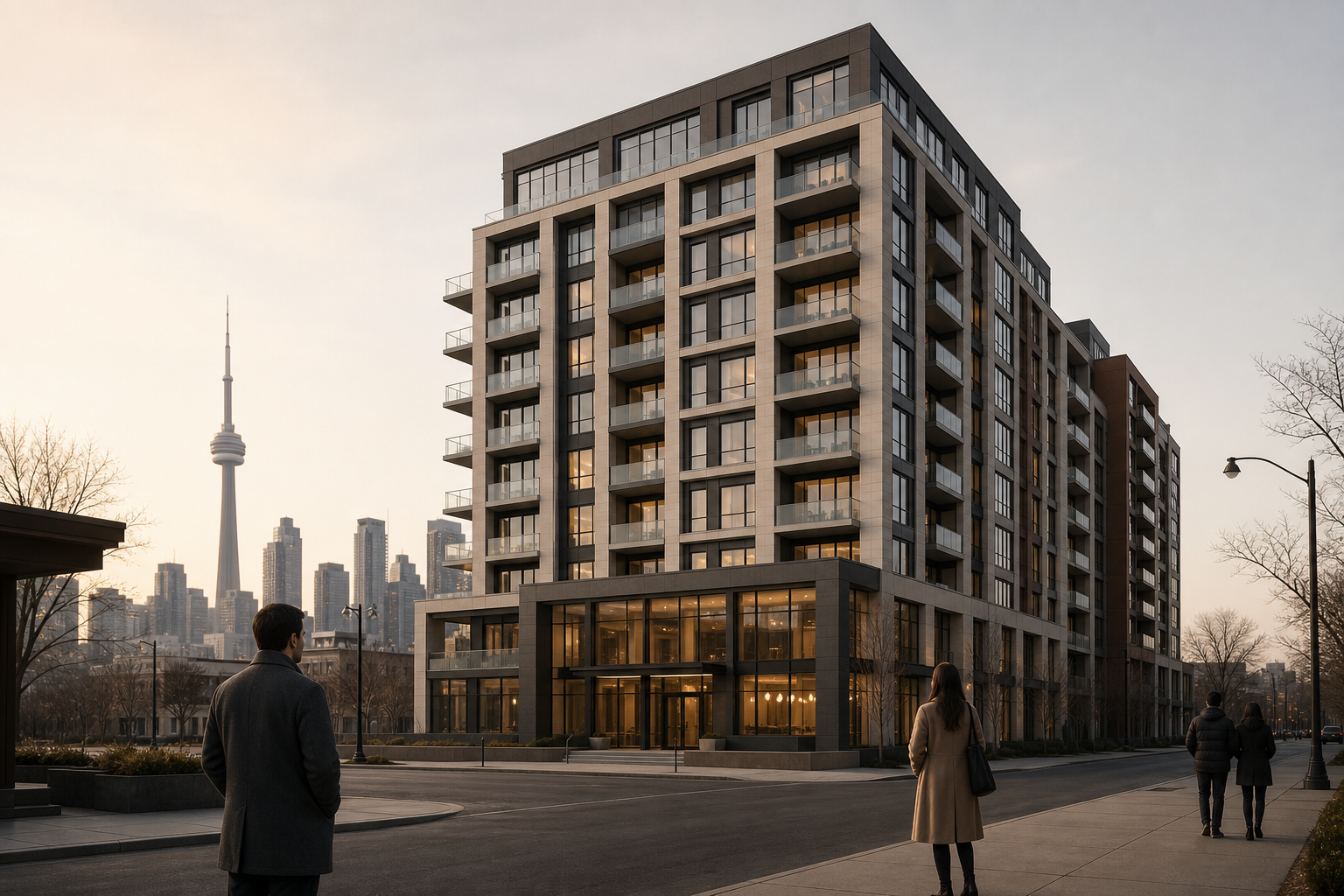

The Manderley sits two blocks from the Toronto Hunt Club at the corner of Kingston Road and Manderley Drive, eleven storeys of finished units, lobby done, elevators running. The court order appointing a receiver went through in early 2026. The building is substantially complete. That matters.
When receivership hits a condo project in Toronto, the usual pattern involves a hole in the ground, a half-built podium, or structural work stalled at the sixth floor. Those failures happen early, when the gap between budgeted costs and actual costs becomes clear or when a lender refuses to fund the next construction draw. The Manderley is different. Nova Ridge Development Partners Inc., the developer behind the project, made it to the finish line. The 121 units are there. The question is why that wasn't enough.
The Final Mile Problem
A condo project doesn't end when the last drywall goes up. It ends when the final occupancy permits clear, when individual unit sales close, and when the mortgage on each unit transfers from the developer's construction financing to the buyer's residential mortgage. That gap, the space between "substantially complete" and "financially closed," is where projects are failing now in a way they weren't three years ago.
Between 2021 and 2024, residential construction costs in Ontario rose at double-digit annual rates, according to Statistics Canada's Building Construction Price Index. For developers who signed fixed-price contracts with general contractors in 2020 or early 2021, that inflation meant bleeding cash in the final phase. The interest carry on construction loans during those months, at rates that peaked near 7% for senior debt and higher for mezzanine tranches, turned what should have been a controlled wind-down into a cash crisis.
At the same time, mortgage qualification rules tightened. Buyers who qualified for financing in 2022 when they signed their agreements of purchase and sale were failing stress tests by late 2024 and early 2025. Every failed closing means the developer must carry that unit longer, pay interest longer, and either find a new buyer or negotiate a discount with the original one. Do that across even 15% of your unit count and the liquidity model collapses.
What Birch Cliff Tells You About Mid-Rise Risk
The Manderley isn't in a fringe market. Kingston Road through Birch Cliff has been gentrifying steadily, shifting from older motels and auto shops to mid-rise residential. The location, minutes from the Scarborough Bluffs, near transit, with lake access, should be a strength. That's the part that makes this receivership structurally informative rather than anecdotal.
Mid-rise projects operate on thinner margins than towers. An 11-storey building doesn't achieve the per-unit cost efficiency of a 40-storey one. The developer often relies on private or secondary lenders rather than the institutional financing a large tower attracts. When those lenders' covenants trip because closings delay, the options narrow fast. By the time Nova Ridge lost control of the asset, the capital stack had likely compressed to the point where equity was gone and junior debt was impaired.
The Buyer's Position
For someone who put down a deposit in 2021 or 2022 and has been waiting to move in, receivership at this stage is worse than an outright project cancellation. The building exists. The unit is real. But the title won't transfer until the receiver organizes the creditor claims and either completes the sales under existing contracts or cancels them and sells the inventory in bulk. That process can take months. Tarion, Ontario's new home warranty program, protects deposits up to a cap. It does not compensate for three years of rising rent paid while waiting for a closing that kept getting postponed.
The receiver's incentive is to maximize recovery for secured creditors, not to honor the original sales timeline. If bulk sales to a REIT or institutional landlord return more than individual closings, that's the path the receiver will take. The Manderley could end up as rental inventory, not ownership, despite being sold as condos.
Receivership used to be a sign that something went wrong early. Now it's a sign that the last 10% of the project, the part that should have been the easiest, became unaffordable to finish under the terms the developer started with. The building's there. The developer isn't.
Read Next
The Fed Hold Everyone Expects Will Sink the Dollar Anyway
Realtors Are Walking Away, And the Prenup Surge Tells You Why
Realtors Are Leaving the Industry, and the Numbers Tell You Why
Kelowna Now Ranks First in Canada for Wildfire Risk: What Condo Buyers Need to Verify Before Closing