Turn your mortgage into a wealth-building tool. Smith Manoeuvre strategies, tax-smart planning, and honest math from two Canadian mortgage strategists.
Trump's 'Human Rights' Tariffs Hit Canada, But the Real Target Is China's Trade Dominance
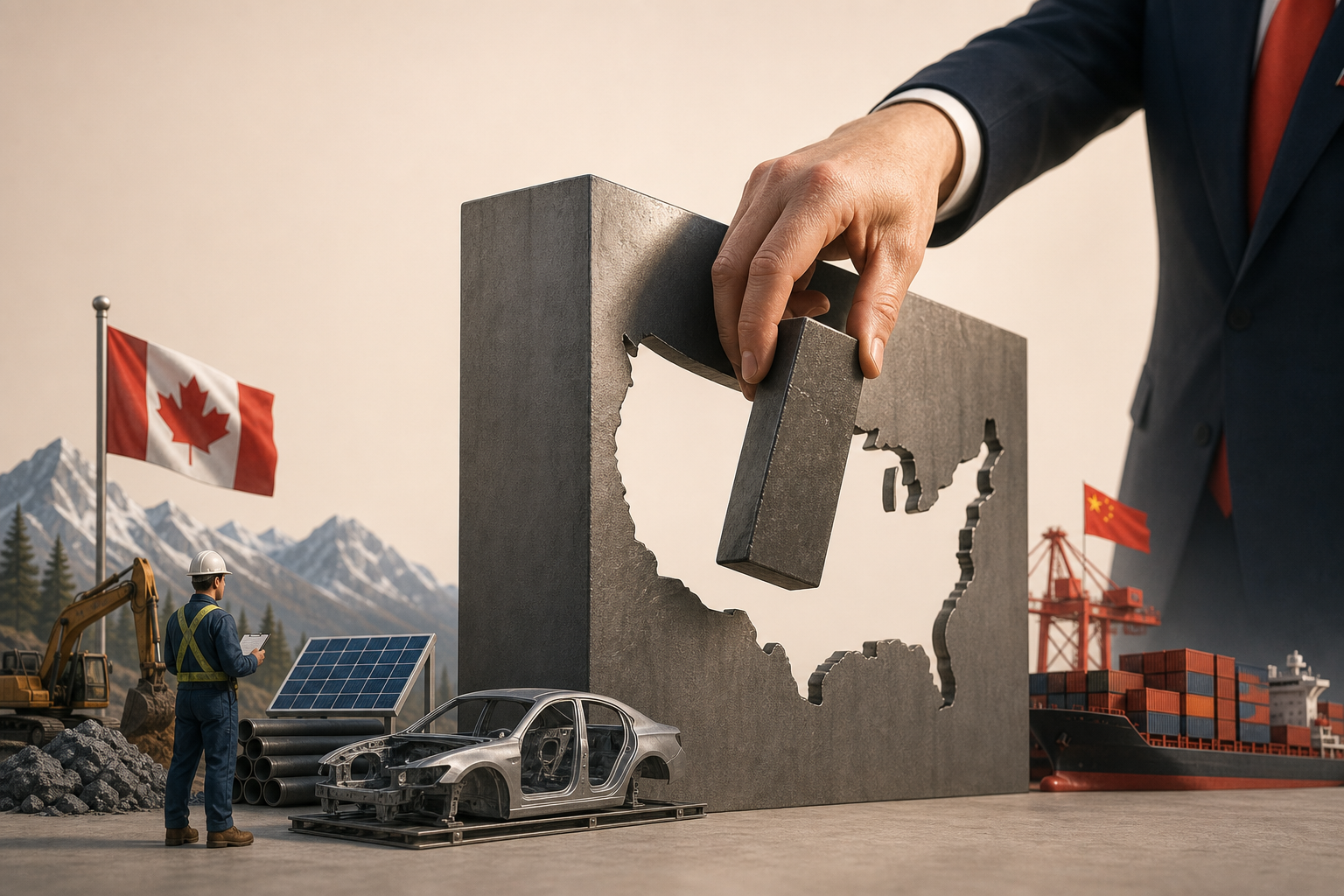
A 12 per cent duty on Canadian steel components headed to Michigan assembly plants starts Monday. The stated reason? Forced labour in supply chains. The actual function? A trial run for the wider decoupling Washington wants with Beijing.
Former president Donald Trump announced Thursday that dozens of countries, Canada among them, will face targeted tariffs designed to punish failures in policing forced labour within their manufacturing networks. The move replaces a 10 per cent blanket duty expiring Friday and marks a shift in how the United States intends to weaponize trade policy in the lead-up to the 2026 CUSMA review. Human rights language is the vehicle. China is the destination.
The Forced Labour Frame Is Expandable by Design
The brilliance of a forced labour tariff, from a protectionist perspective, is that it shifts the burden of proof entirely onto the exporter. A Canadian mining firm shipping rare earth components to Ohio now has to demonstrate that nothing in its supply chain traces back to coerced labour. That's not a compliance checkbox. That's an investigative requirement with no clear endpoint. Even a single subcontractor three tiers down the chain sourcing raw material from a suspect jurisdiction can trigger a shipment hold at the border.
China remains the primary target, but the architecture works on anyone. Canada's Fighting Against Forced Labour and Child Labour in Supply Chains Act came into force in 2024 and requires large entities to file annual reports detailing their due diligence. Critics in Washington have argued the reporting threshold is too high and the penalties too weak. U.S. Customs and Border Protection operates under a "rebuttable presumption" standard for certain regions, meaning goods are blocked until the importer proves innocence. Canada's system, by comparison, relies more on disclosure than interdiction. That gap gives Washington the leverage it needs to declare Canadian enforcement insufficient without technically violating CUSMA's dispute mechanisms.
The policy forces a wedge into integrated supply chains without needing to invoke national security exemptions, which have grown politically harder to justify for long-standing allies. Forced labour is bipartisan, morally unassailable, and flexible enough to cover textiles, minerals, electronics, and agriculture. It's also nearly impossible to fully disprove at scale.
Canada Becomes Collateral in a Larger Realignment
The 2026 CUSMA review was always going to be contentious. This tariff announcement is the opening bid. By framing Canada as non-compliant on labour standards, the Trump camp sets the stage for a renegotiation that privileges American manufacturing over integrated continental production. The fact that over 30 U.S. states count Canada as their top export destination suggests the gambit carries domestic risk, but the political arithmetic favours confrontation. Blaming foreign supply chains for American job losses plays better than acknowledging that automation and domestic cost structures are doing most of the work.
For Canadian firms, the message is clear: diversify or pay. The compliance tax for proving clean sourcing will run into the mid-seven figures for any operation with complex supplier networks. Smaller manufacturers without the resources to audit every upstream partner will either exit U.S. markets or absorb the duty as a cost of doing business.
The Real Test Is Whether Europe Follows
If the European Union adopts a similar framework, the forced labour tariff becomes the new baseline for global trade architecture. China would face coordinated barriers across its three largest export markets. Canada, caught in the middle, would need to choose between aligning its enforcement standards with Washington's rebuttable presumption model or accepting permanent tariff exposure.
The irony is that Canada's 2024 legislation was designed partly to preempt exactly this scenario. It didn't work. The Trump administration's approach treats ally and adversary alike when the goal is supply chain repatriation. Human rights language makes the policy harder to challenge. But the structural outcome is the same as a straightforward protectionist tariff. Only the justification has changed.



A 12 per cent duty on Canadian steel components headed to Michigan assembly plants starts Monday. The stated reason? Forced labour in supply chains. The actual function? A trial run for the wider decoupling Washington wants with Beijing.
Former president Donald Trump announced Thursday that dozens of countries, Canada among them, will face targeted tariffs designed to punish failures in policing forced labour within their manufacturing networks. The move replaces a 10 per cent blanket duty expiring Friday and marks a shift in how the United States intends to weaponize trade policy in the lead-up to the 2026 CUSMA review. Human rights language is the vehicle. China is the destination.
The Forced Labour Frame Is Expandable by Design
The brilliance of a forced labour tariff, from a protectionist perspective, is that it shifts the burden of proof entirely onto the exporter. A Canadian mining firm shipping rare earth components to Ohio now has to demonstrate that nothing in its supply chain traces back to coerced labour. That's not a compliance checkbox. That's an investigative requirement with no clear endpoint. Even a single subcontractor three tiers down the chain sourcing raw material from a suspect jurisdiction can trigger a shipment hold at the border.
China remains the primary target, but the architecture works on anyone. Canada's Fighting Against Forced Labour and Child Labour in Supply Chains Act came into force in 2024 and requires large entities to file annual reports detailing their due diligence. Critics in Washington have argued the reporting threshold is too high and the penalties too weak. U.S. Customs and Border Protection operates under a "rebuttable presumption" standard for certain regions, meaning goods are blocked until the importer proves innocence. Canada's system, by comparison, relies more on disclosure than interdiction. That gap gives Washington the leverage it needs to declare Canadian enforcement insufficient without technically violating CUSMA's dispute mechanisms.
The policy forces a wedge into integrated supply chains without needing to invoke national security exemptions, which have grown politically harder to justify for long-standing allies. Forced labour is bipartisan, morally unassailable, and flexible enough to cover textiles, minerals, electronics, and agriculture. It's also nearly impossible to fully disprove at scale.
Canada Becomes Collateral in a Larger Realignment
The 2026 CUSMA review was always going to be contentious. This tariff announcement is the opening bid. By framing Canada as non-compliant on labour standards, the Trump camp sets the stage for a renegotiation that privileges American manufacturing over integrated continental production. The fact that over 30 U.S. states count Canada as their top export destination suggests the gambit carries domestic risk, but the political arithmetic favours confrontation. Blaming foreign supply chains for American job losses plays better than acknowledging that automation and domestic cost structures are doing most of the work.
For Canadian firms, the message is clear: diversify or pay. The compliance tax for proving clean sourcing will run into the mid-seven figures for any operation with complex supplier networks. Smaller manufacturers without the resources to audit every upstream partner will either exit U.S. markets or absorb the duty as a cost of doing business.
The Real Test Is Whether Europe Follows
If the European Union adopts a similar framework, the forced labour tariff becomes the new baseline for global trade architecture. China would face coordinated barriers across its three largest export markets. Canada, caught in the middle, would need to choose between aligning its enforcement standards with Washington's rebuttable presumption model or accepting permanent tariff exposure.
The irony is that Canada's 2024 legislation was designed partly to preempt exactly this scenario. It didn't work. The Trump administration's approach treats ally and adversary alike when the goal is supply chain repatriation. Human rights language makes the policy harder to challenge. But the structural outcome is the same as a straightforward protectionist tariff. Only the justification has changed.
Read Next
The Fed Hold Everyone Expects Will Sink the Dollar Anyway
Realtors Are Walking Away, And the Prenup Surge Tells You Why
Realtors Are Leaving the Industry, and the Numbers Tell You Why
Kelowna Now Ranks First in Canada for Wildfire Risk: What Condo Buyers Need to Verify Before Closing