Turn your mortgage into a wealth-building tool. Smith Manoeuvre strategies, tax-smart planning, and honest math from two Canadian mortgage strategists.
Trump's Tariff Threats Aren't About Trade, They're About Protection
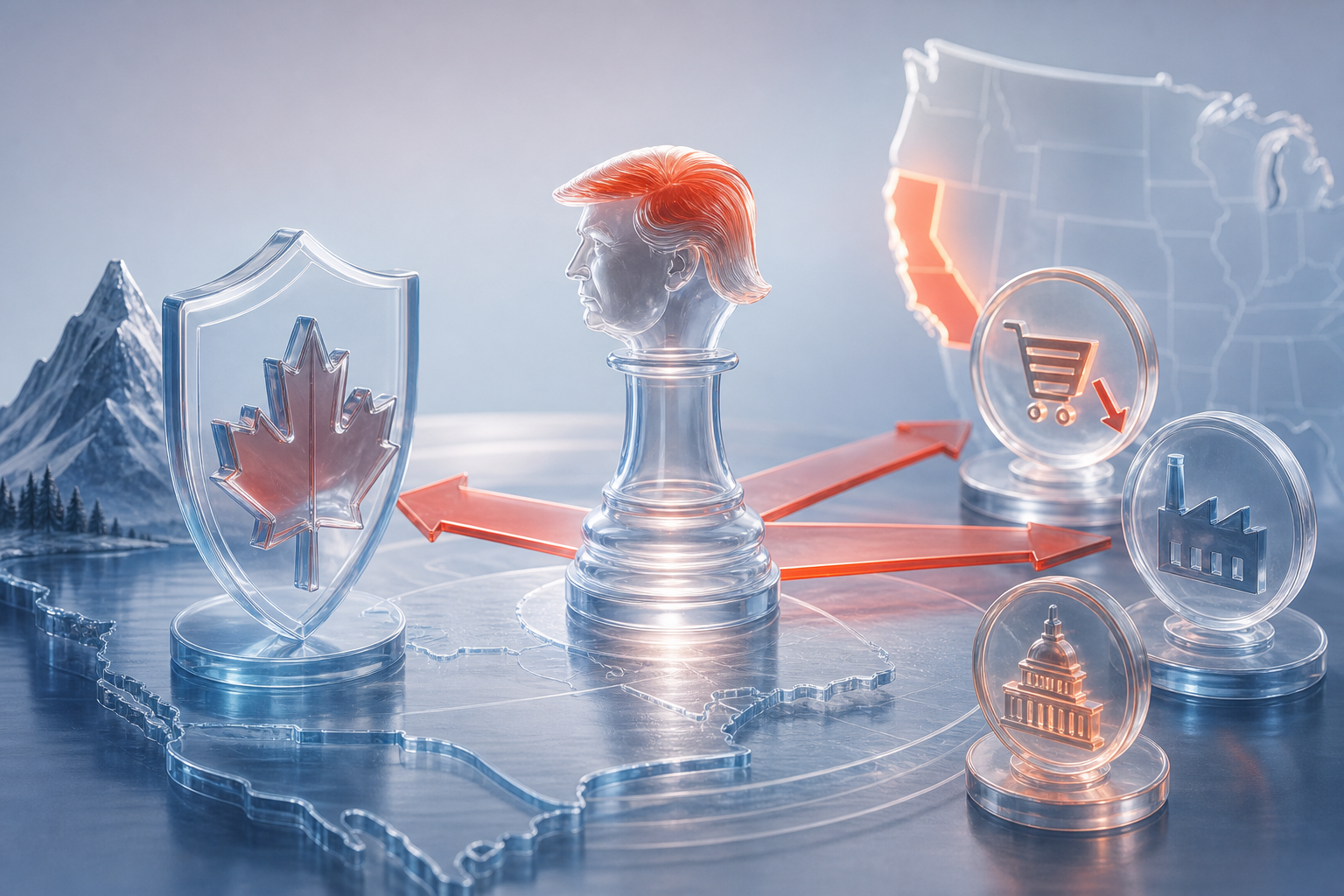
The 2026 review window for the Canada-United States-Mexico Agreement is still months away, but the American negotiating posture is already set. A baseline 20-percent tariff on all imports, including Canadian goods, has been floated not as policy but as pressure. The threat is the instrument.
What looks like trade policy from the outside is protection politics dressed in trade language. The objective is not reducing barriers or improving flows. It is extracting concessions on issues that have nothing to do with the efficiency of cross-border commerce: digital services taxes, defence spending commitments, dairy market access. The tariff becomes a universal bargaining chip, applicable to any friction point in the bilateral relationship.
This changes what a rational Canadian response looks like. Treating the tariff threat as a serious trade proposal, analyzing its sectoral impacts, modeling the GDP hit, preparing detailed rebuttals, misses the structure of what is happening. The threat is theater. It exists to generate reactive behaviour: emergency meetings, hasty offers, preemptive concessions made to avoid a penalty that was never going to be applied as stated.
Why the U.S. position has internal limits
A 20-percent tariff on Canadian energy, lumber, and minerals would function as a tax on American consumers and manufacturers. Canada supplies roughly 60 percent of U.S. crude oil imports and the majority of softwood lumber used in residential construction. These are not luxury goods with ready substitutes. They are inputs to industries with narrow margins and political constituencies that will call their senators the week prices move.
The asymmetry cuts both ways. Canada sends 75 percent of its exports south, which creates dependency. But 36 U.S. states list Canada as their top export market, and the integrated supply chains in automotive, aerospace, and energy mean that disrupting Canadian imports disrupts American production. A Michigan parts supplier does not benefit from a tariff on Ontario steel if the tariff raises input costs enough to make the final assembly uncompetitive.
This is the structural ceiling on how far the threat can actually be pushed. The political logic of the tariff, rally the base, signal toughness, create leverage, runs into the economic logic of a trillion-dollar trading relationship that cannot be severed without self-harm.
What calm actually accomplishes
The 2018 steel and aluminum tariffs under Section 232 produced a predictable cycle: U.S. announces tariffs, Canada retaliates with $3.6 billion in targeted countermeasures on bourbon and ketchup, both sides eventually negotiate a carve-out. The cycle worked because Canada treated the tariffs as a negotiation artifact, not a crisis.
Calm is not passivity. It is refusing to treat opening bids as final terms. When Ottawa responds to tariff threats with emergency summits and preemptive concessions, it validates the threat as credible and creates an incentive to issue more threats. When Ottawa treats the announcement as background noise and continues normal diplomatic engagement, the threat loses its function.
The 2026 CUSMA review includes a sunset clause: the agreement expires in 16 years unless all three parties confirm extension by July 1, 2026. That creates a natural leverage point for the U.S. to demand changes. But the review is not a renegotiation. It is a confirmation process. Allowing it to be reframed as a crisis gives away the structural advantage Canada has, which is that the status quo works and unwinding it is expensive.
The deeper risk is not the tariff. It is that Canada begins governing in reaction to threats that may never materialize, distorting domestic policy to appease foreign political theater. A 20-percent tariff proposal from a U.S. administration that needs Michigan and Pennsylvania to win reelection is not a trade policy. It is a positioning statement. Treating it as anything else is the mistake.



The 2026 review window for the Canada-United States-Mexico Agreement is still months away, but the American negotiating posture is already set. A baseline 20-percent tariff on all imports, including Canadian goods, has been floated not as policy but as pressure. The threat is the instrument.
What looks like trade policy from the outside is protection politics dressed in trade language. The objective is not reducing barriers or improving flows. It is extracting concessions on issues that have nothing to do with the efficiency of cross-border commerce: digital services taxes, defence spending commitments, dairy market access. The tariff becomes a universal bargaining chip, applicable to any friction point in the bilateral relationship.
This changes what a rational Canadian response looks like. Treating the tariff threat as a serious trade proposal, analyzing its sectoral impacts, modeling the GDP hit, preparing detailed rebuttals, misses the structure of what is happening. The threat is theater. It exists to generate reactive behaviour: emergency meetings, hasty offers, preemptive concessions made to avoid a penalty that was never going to be applied as stated.
Why the U.S. position has internal limits
A 20-percent tariff on Canadian energy, lumber, and minerals would function as a tax on American consumers and manufacturers. Canada supplies roughly 60 percent of U.S. crude oil imports and the majority of softwood lumber used in residential construction. These are not luxury goods with ready substitutes. They are inputs to industries with narrow margins and political constituencies that will call their senators the week prices move.
The asymmetry cuts both ways. Canada sends 75 percent of its exports south, which creates dependency. But 36 U.S. states list Canada as their top export market, and the integrated supply chains in automotive, aerospace, and energy mean that disrupting Canadian imports disrupts American production. A Michigan parts supplier does not benefit from a tariff on Ontario steel if the tariff raises input costs enough to make the final assembly uncompetitive.
This is the structural ceiling on how far the threat can actually be pushed. The political logic of the tariff, rally the base, signal toughness, create leverage, runs into the economic logic of a trillion-dollar trading relationship that cannot be severed without self-harm.
What calm actually accomplishes
The 2018 steel and aluminum tariffs under Section 232 produced a predictable cycle: U.S. announces tariffs, Canada retaliates with $3.6 billion in targeted countermeasures on bourbon and ketchup, both sides eventually negotiate a carve-out. The cycle worked because Canada treated the tariffs as a negotiation artifact, not a crisis.
Calm is not passivity. It is refusing to treat opening bids as final terms. When Ottawa responds to tariff threats with emergency summits and preemptive concessions, it validates the threat as credible and creates an incentive to issue more threats. When Ottawa treats the announcement as background noise and continues normal diplomatic engagement, the threat loses its function.
The 2026 CUSMA review includes a sunset clause: the agreement expires in 16 years unless all three parties confirm extension by July 1, 2026. That creates a natural leverage point for the U.S. to demand changes. But the review is not a renegotiation. It is a confirmation process. Allowing it to be reframed as a crisis gives away the structural advantage Canada has, which is that the status quo works and unwinding it is expensive.
The deeper risk is not the tariff. It is that Canada begins governing in reaction to threats that may never materialize, distorting domestic policy to appease foreign political theater. A 20-percent tariff proposal from a U.S. administration that needs Michigan and Pennsylvania to win reelection is not a trade policy. It is a positioning statement. Treating it as anything else is the mistake.
Read Next
The Fed Hold Everyone Expects Will Sink the Dollar Anyway
Realtors Are Walking Away, And the Prenup Surge Tells You Why
Realtors Are Leaving the Industry, and the Numbers Tell You Why
Kelowna Now Ranks First in Canada for Wildfire Risk: What Condo Buyers Need to Verify Before Closing